Our teachers
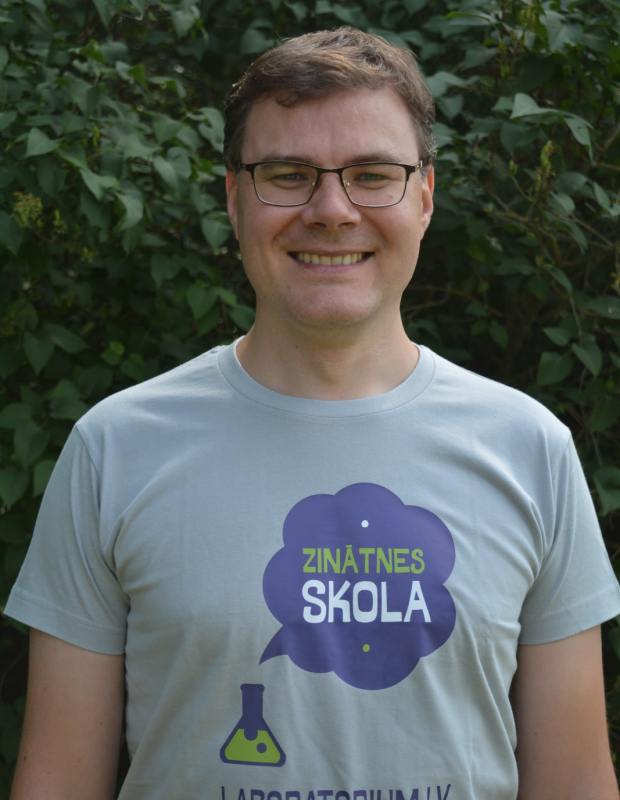
Mārtiņš Gulbis
Founder, Director, Programme Developer, and Teacher
In 2007, Mārtiņš decided to pursue a career in education, and just two years later he became a Physics teacher. Through his teaching experience, he realised that theoretical concepts are difficult to understand without practical application. This insight inspired the idea of creating Laboratorium Science School.
The school, as we know it today, was founded in 2014 and continues to grow and evolve.
Education & Interests
Mārtiņš holds a Master's degree in Chemistry and a higher education degree in Pedagogy, qualifying him as a secondary school Chemistry teacher.
He enjoys exploring both nature and human behaviour. Recently, he has developed a particular passion for plants and gardening.
What is the most important thing you want to give your students?
"I want my students to continue exploring, questioning, and learning with endless curiosity- even after their lessons at school have ended."
What are you most proud of?
"I am proud that many of our current and former students:
take part in Chemistry and Physics Olympiads and achieve award-winning results;
continue exploring the subjects they are passionate about with genuine enthusiasm;
support their teachers by helping during science lessons in mainstream schools;
help their friends and classmates better understand Physics and Chemistry."
About Laboratorium Science School:
"I believe our values are especially important in today's world. Two of the most significant are:
Curiosity – encouraging children and young people to ask questions, think critically, explore, and enjoy learning.
Sustainability – the true impact of a science school is not seen immediately. Its greatest contribution to society becomes visible over many years, even decades. By continuing our work, we create an ever-growing long-term positive impact on future generations."
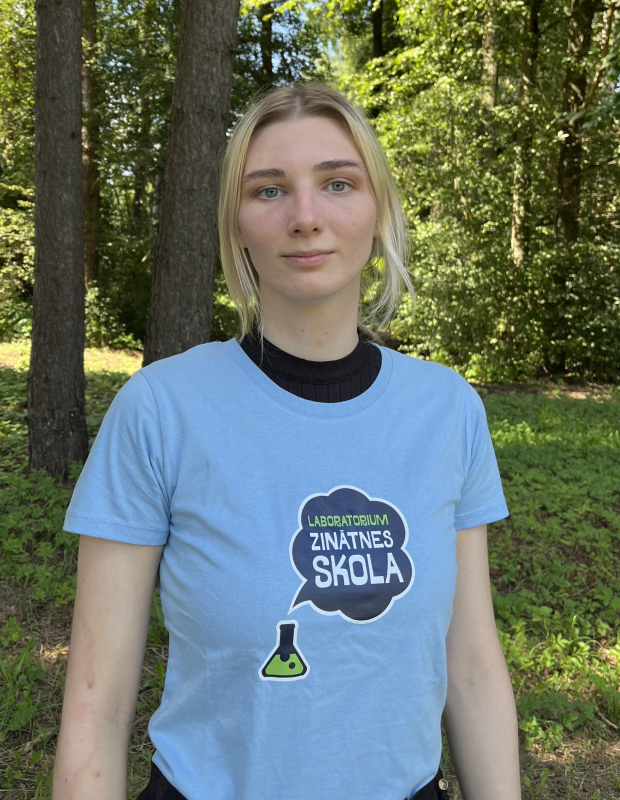
Linda Trofimoviča
Chemistry and Physics Teacher
She has extensive experience working with children. Before joining our school, she worked at a kindergarten for two years, and has now been working at Laboratorium for three years.
Education and interests:
She is currently a second-year student at the University of Latvia, studying at the Faculty of Physics, Mathematics and Optometry.
In her free time, she enjoys sports yoga, tennis and drawing.
What would you like to teach children first and foremost?
“That everything difficult can actually be quite simple.”
I am proud of:
“The fact that after the lessons, you can literally see sparks in the children’s eyes, showing that they have genuinely become interested in the topic and want to learn more or share their new knowledge. I also see significant progress in myself and in my skills as a Laboratorium employee, and I am proud of that.”
About Laboratorium Science School:
“Laboratorium gives school-age children the opportunity to explore different sciences through practical experience, which plays an important role in understanding the world around us and maintaining children’s interest in science. It also gives me the opportunity to directly participate in and observe children’s development and their future, and I am happy to work as part of such a wonderful team.”

Klara Kuzņecova
Physics and Chemistry Teacher
Klara works as a Science and Biology teacher. She has led summer camps, science workshops, and hands-on experiments at public events, and recently joined the Laboratorium Science School team.
Education & Interests
Klara is a fourth-year student in the Smart Electrical Energy Systems programme at Riga Technical University (RTU).
In her free time, she enjoys travelling, hiking, swimming, and staying active through all kinds of physical activities.
What do you enjoy most about teaching and working with students?
"What I value most is watching my students grow and seeing their genuine curiosity. I love inspiring them to ask questions—not only of their teachers, but also of the world around them and of themselves."
What is the most important thing you want to teach or give your students?
"The most important thing I want to give my students is energy. Just like in Physics, energy comes in many forms. What matters most to me is that students learn how to apply the knowledge and skills they gain in class to real life. Science is valuable in so many ways—not only for achieving good grades, but also for amazing friends with exciting experiments and science tricks, improving concentration, developing critical thinking and memory, and much more."